Technical Designer · Light · Sound · Projection
I design the light and sound a story needs — and when the instrument doesn't exist yet, I build it.
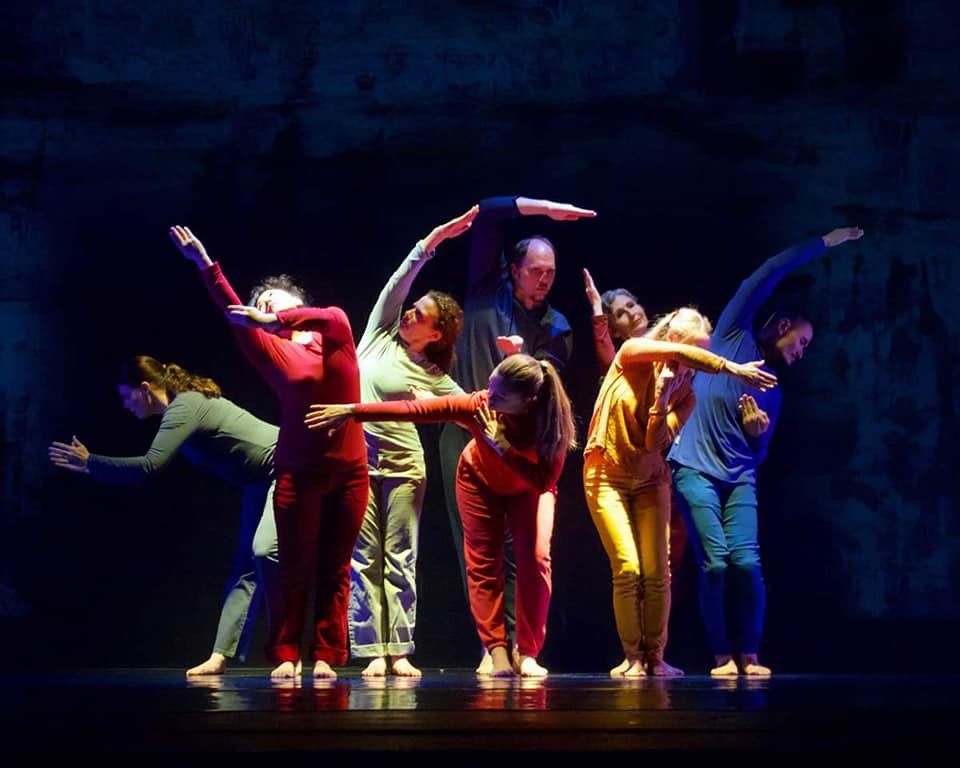
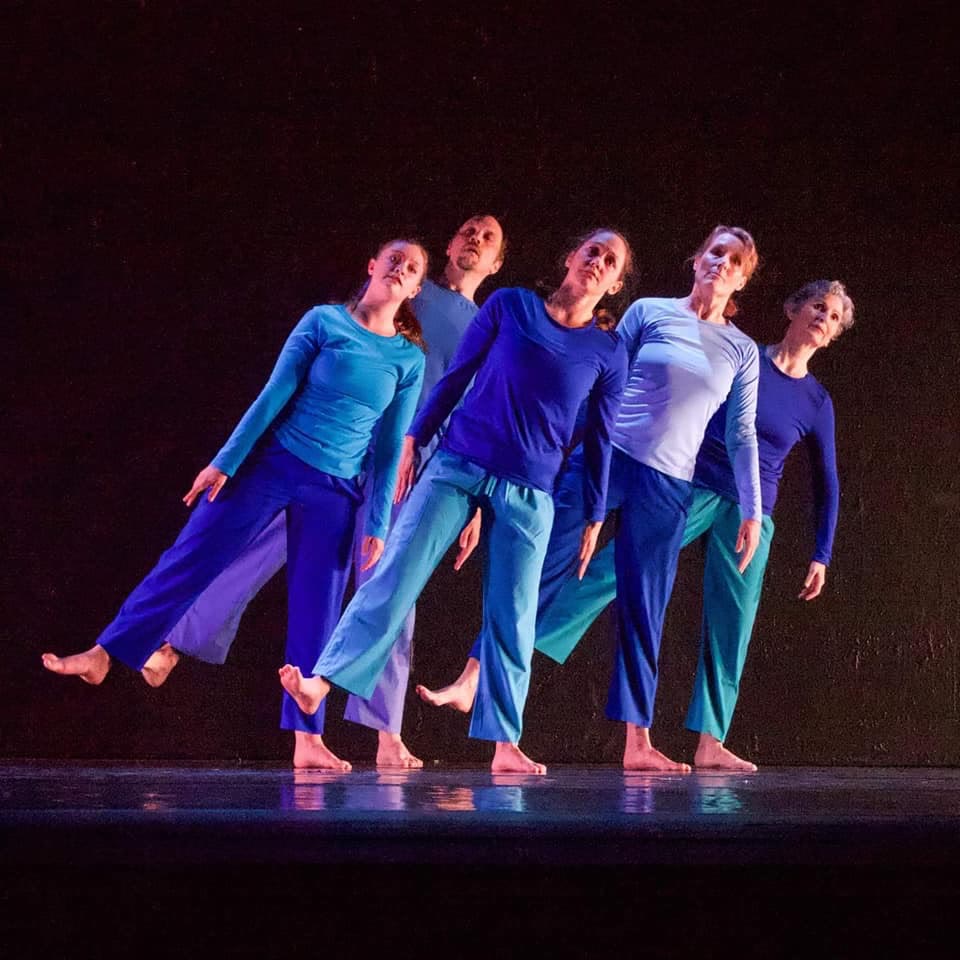
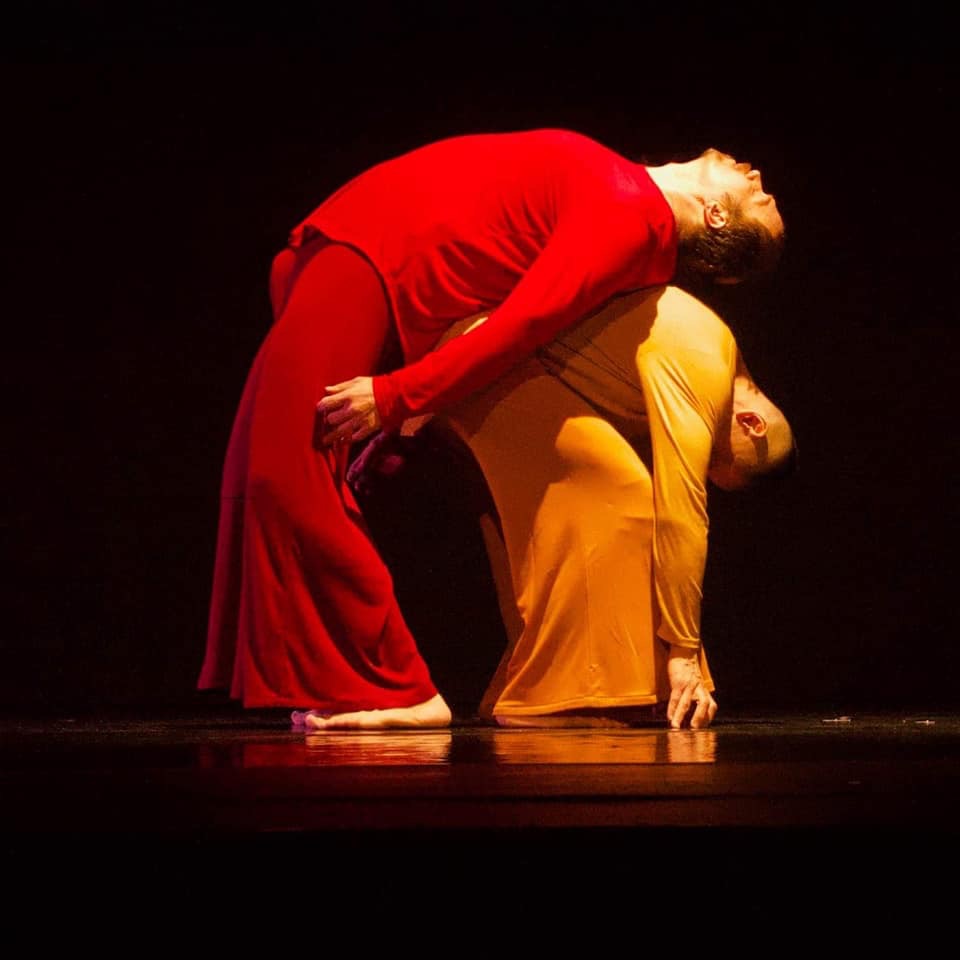
Drift · MotionArt, Collabulous, 2019 · Photo: Larry Risser
Light · Sound · Custom LED
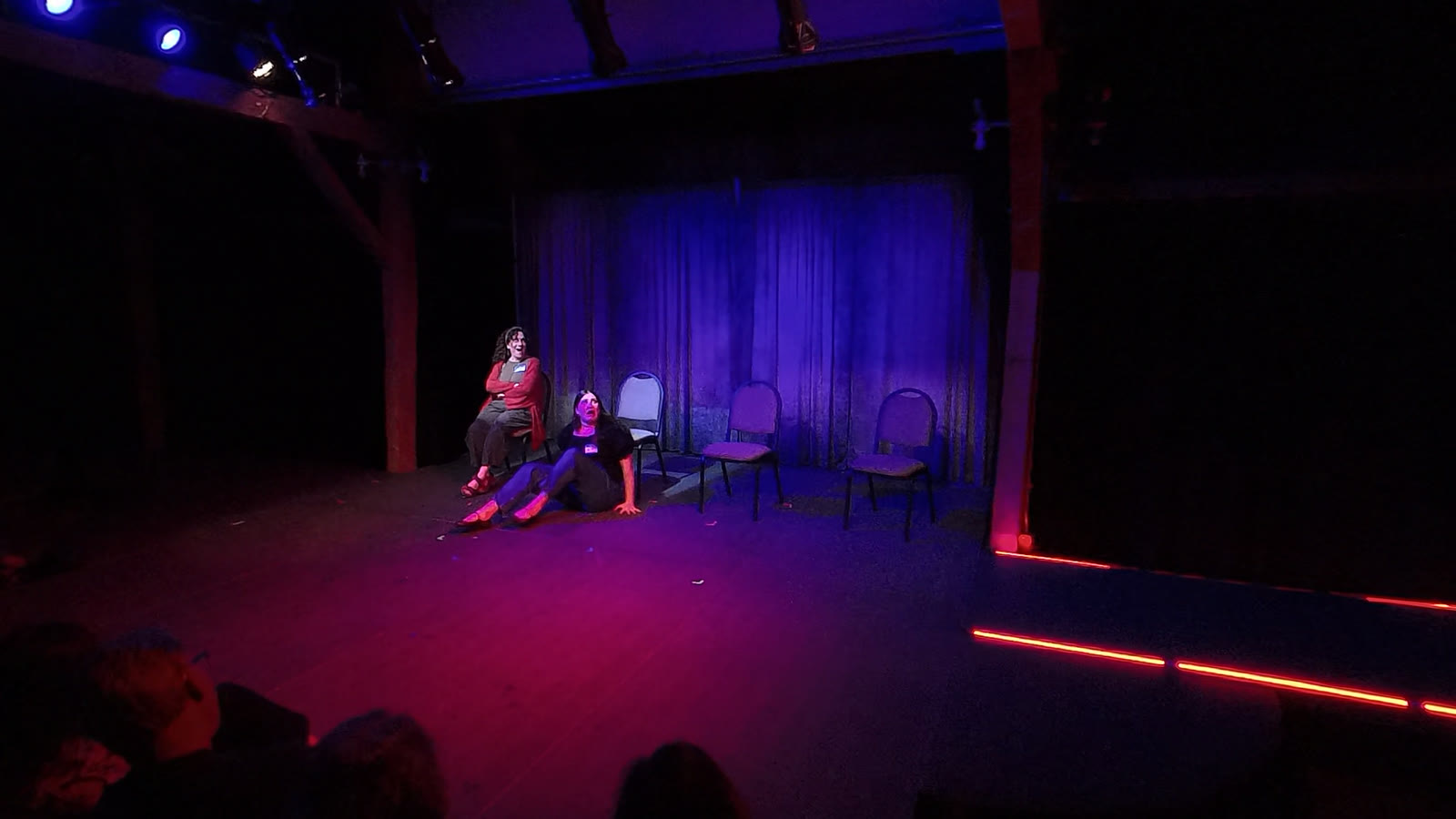
The director imagined an unknown limbo: a waiting room where a mysterious voice calls the actors away, one by one.
We realized it as a single instrument of light, sound, and image. A path of LED light built into the set runs out to meet each character as the voice calls, a bell sounding as it goes.
Built for this production: custom controller hardware, firmware, and cue programming for LED rope and fairy-light fixtures across the evening of one-act plays.
It has been such a pleasure bringing Toward the Unknown Region to life with you. I'm forever grateful for your willingness to take on the challenge. Director, Toward the Unknown Region
2026 · Eden Prairie Players · Collection of One Acts
Photo: Mike Milkovich
Gear: Addressable LED fixtures
Lighting · Projection
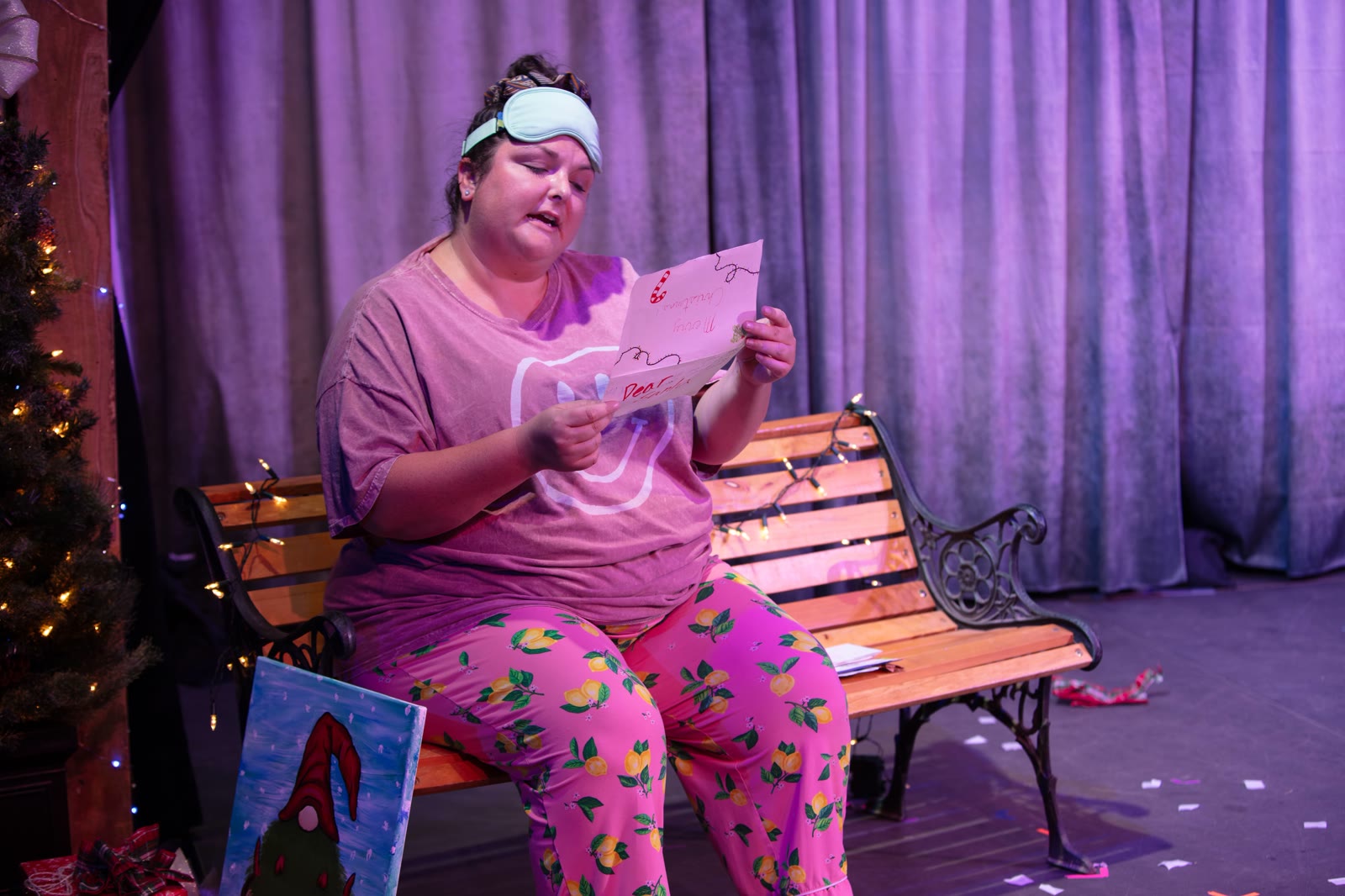
A snow-globe of a play, pitched somewhere between a community theatre Christmas spectacular and the inside of a greeting card. The design leaned all the way in: thousands of fairy lights strung through the set, and a projected "Hallmark Wormhole" built from one line in the director's description.
I am still blown away that you strung up all of those fairy lights for us without me ever asking for it — it brings so much twinkling joy to this show. And the Hallmark Wormhole! You took that abstract phrase and ran with it. Director, Christmastown
After seeing the production, the playwright said she intends to write the lighting cues into her script.
2026 · Eden Prairie Players · Collection of One Acts
Photo: Maxwell Mars · The North Star Portrait Company
Sound · Live Video
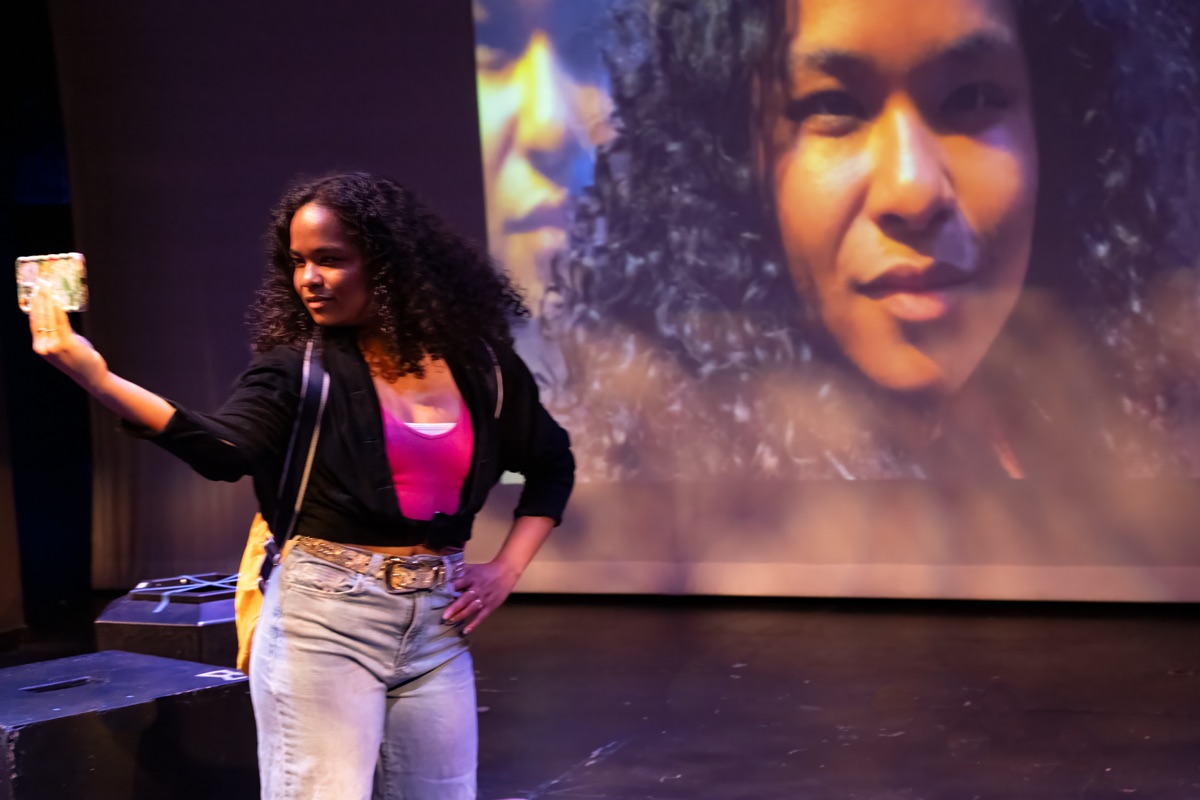
A sci-fi comedy about observers from another dimension. Cameras carried onstage by the actors put live video on the walls of the stage, opening an interdimensional wormhole through the fourth wall.
Sound design for the festival alongside it.
Technology: QLab, vMix, NDI cameras, projection.
2026 · Young Minnesota Playwrights Festival · Dystopian Pizza Rolls
Photo: Richard C. Hudson
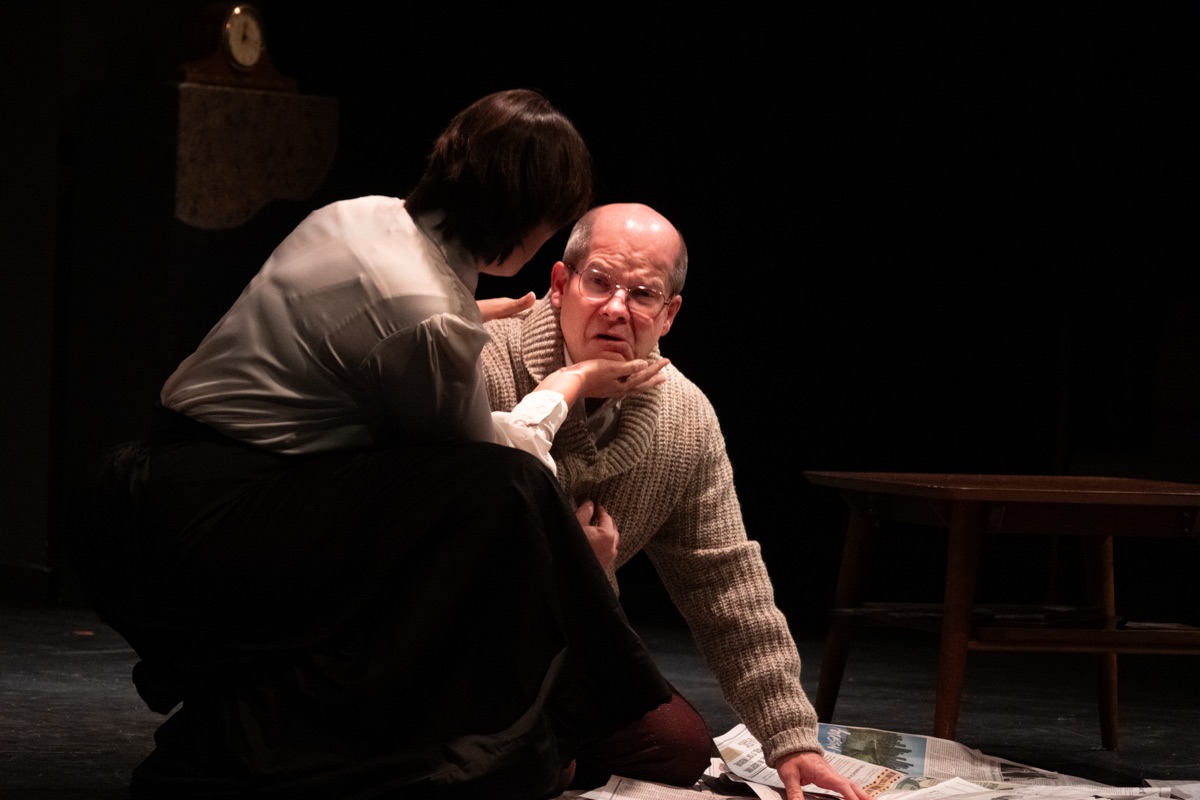
Sound Design · Aural Environment
A serial killer is loose in London, and the killer is somewhere on the stage. The play never tells us who.
The sound bed carried that unresolved dread, driving the tension and tracking the growing insanity of at least one of the characters.
2026 · Young Minnesota Playwrights Festival
Photo: Richard C. Hudson
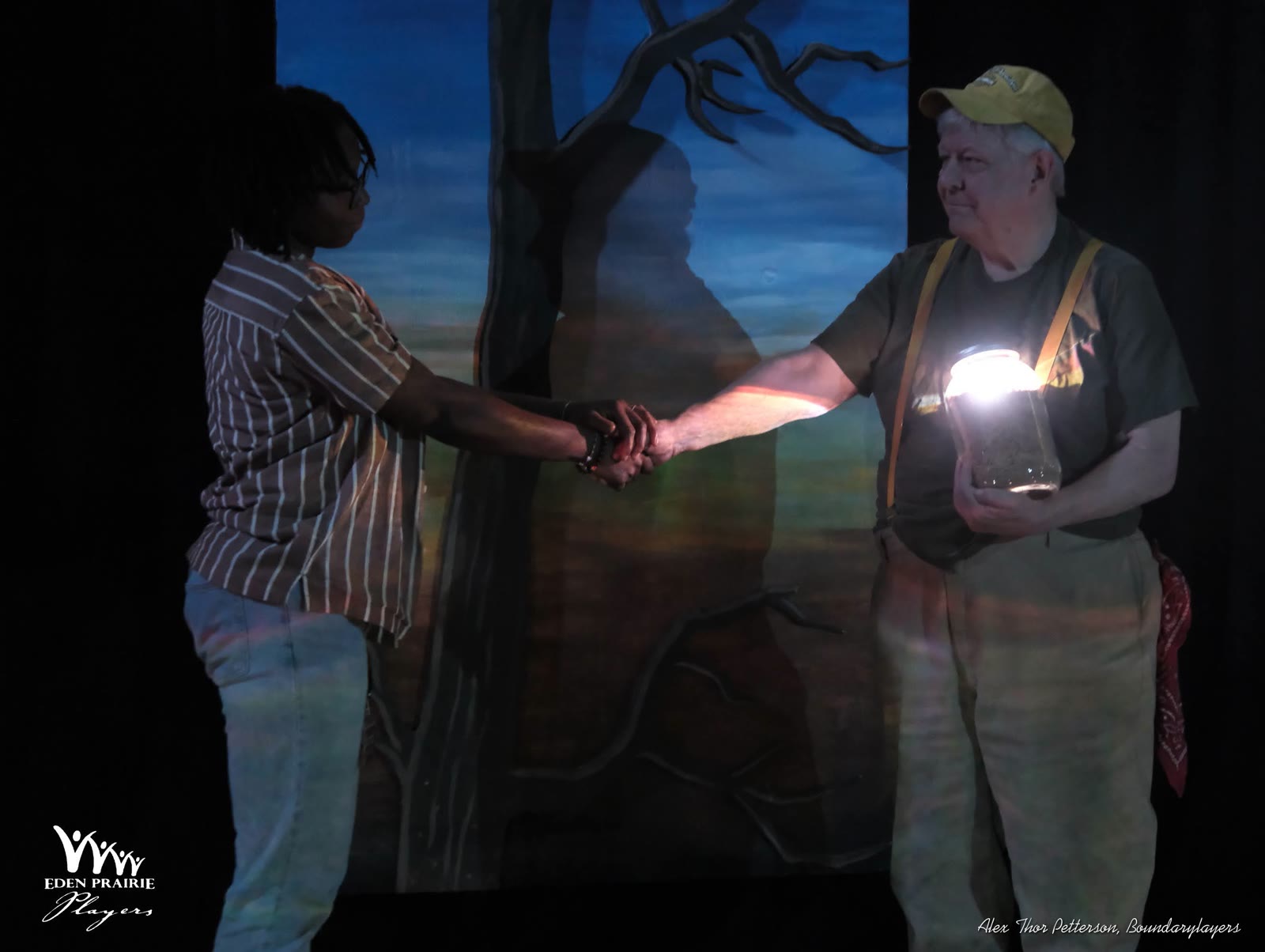
Lighting · Projection · Wireless Props
Seven short plays, seven distinct worlds, one rig. For the candlelit moments we
built wireless jars that flicker like real flame and take their cues from the
lighting console, with no cable back to the set — carried on, set down, handed
between actors.
Pictured: Dirt, lit by a jar and a projected dusk.
2026 · Eden Prairie Players · Women's One Acts
Photo: Alex Thor Petterson · Boundarylayers
Gear: Wireless flame jars
Dance · Lighting · Projection · Sound
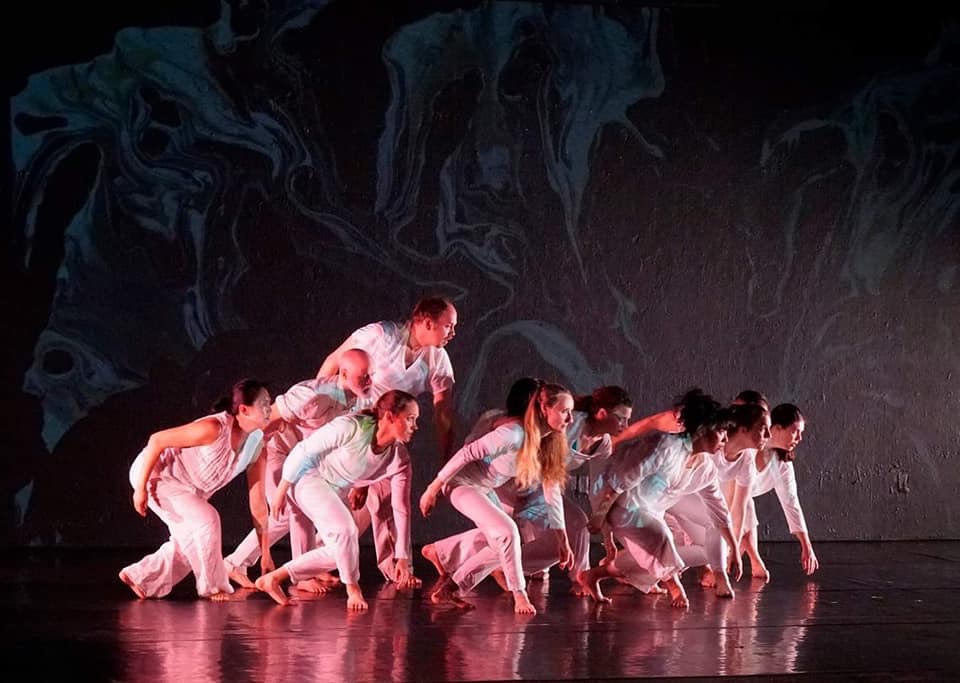
Lighting, projection and sound designer — and technical director — for
MotionArt,
a modern dance company in Minneapolis. Evening-length concerts at the Howard Conn
Fine Arts Center, each a programme of several pieces, many of them premieres built
with the choreographer from the first conversation.
Space Encounters (2016) · Games People Play (2018) ·
Collabulous (2019) ·
Ripple Effect (2020 — closed by the pandemic before it opened)
Among the pieces: Drift, Pedemorphosis, Strings Attached,
Five, Six, Seven, Chez Poulet, Modern Love,
Fray, Light Trip, Cordata,
Spring Dance, Positional Sacrifices.
MotionArt · Howard Conn Fine Arts Center · Minneapolis
Photo: Larry Risser · Drift, 2019
Dance Technology
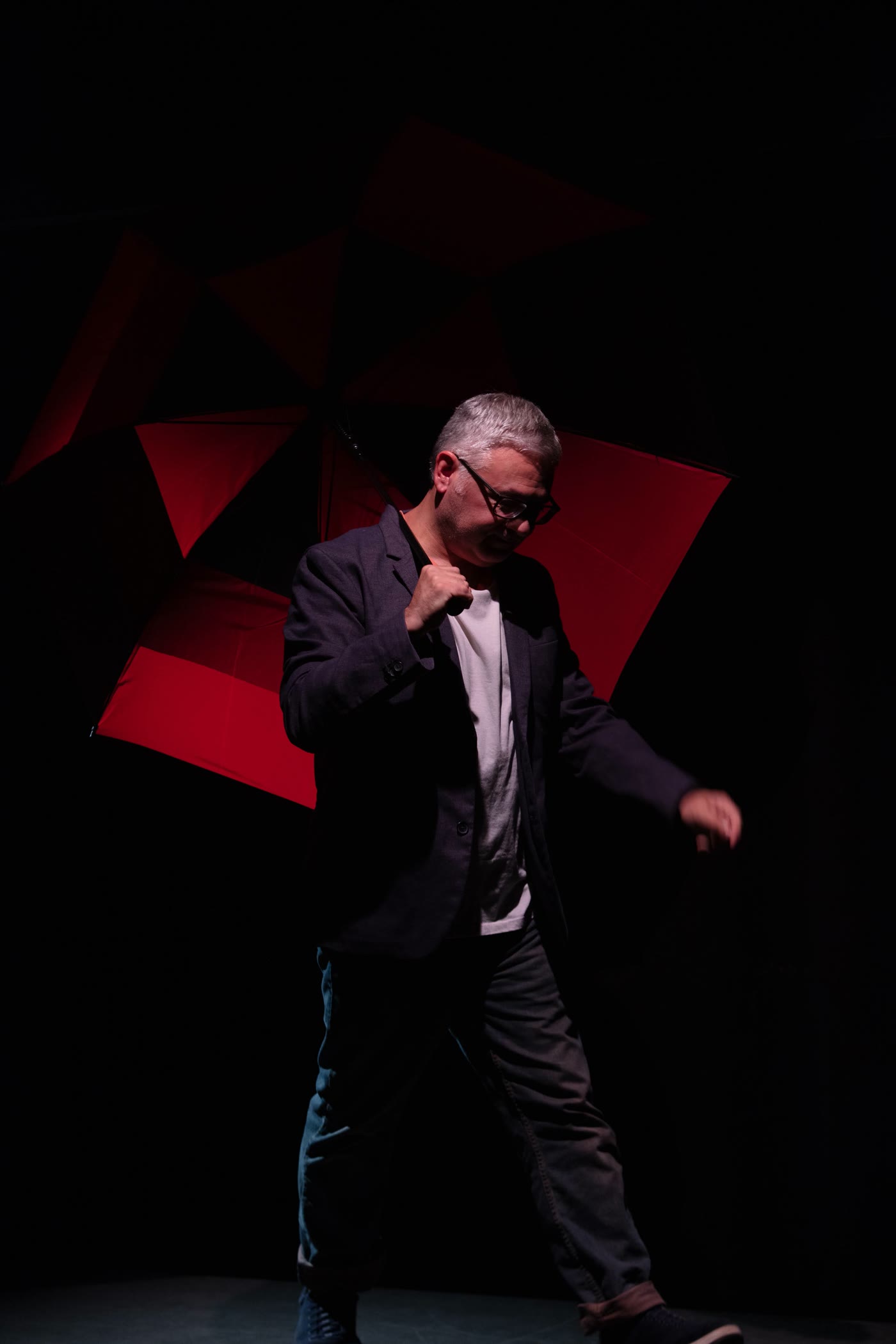
A story about a man falling out of love with humans — and in love with the most
human thing in his life, his Perplexa.
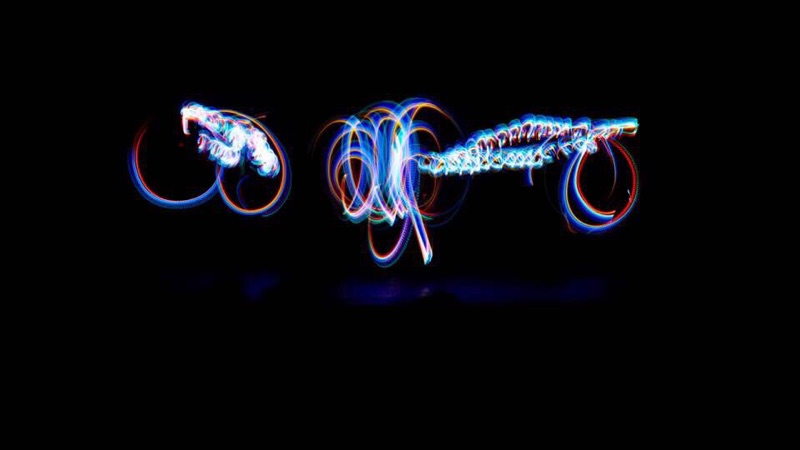
The piece needed a handheld device that answered the dancer's motion in light and
in sound. We built one: a Raspberry Pi behind a 36-pixel RGB shield, driven by a
custom OSC API and cued from QLab alongside everything else in the show.
Technology: QLab, OSC, TouchOSC, Raspberry Pi, custom hardware and firmware.
MotionArt · Twin Cities
Video & Projection Mapping
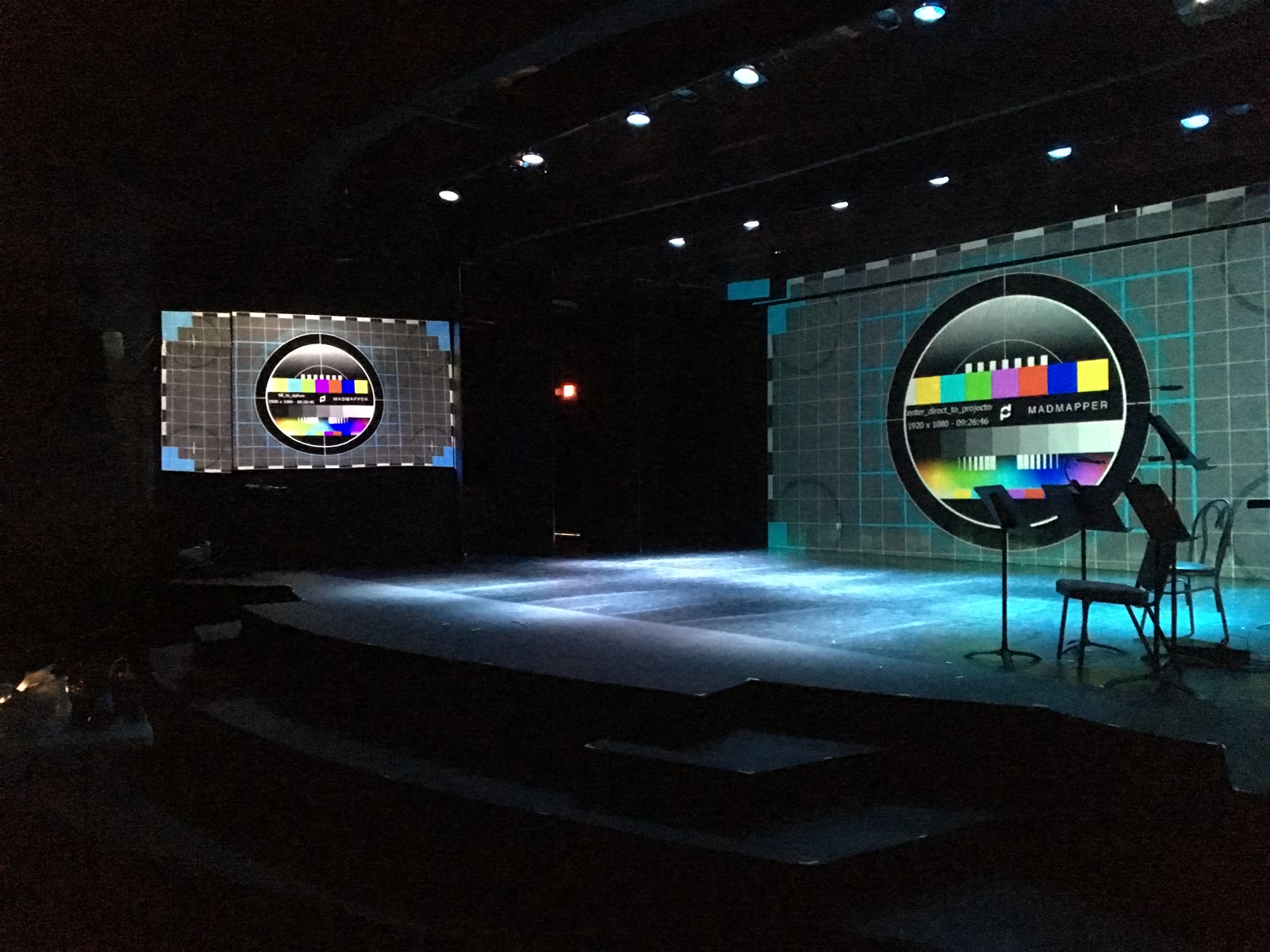
Biome turns still lifes into ecosystems. Layered paintings are mapped
across multiple surfaces so that separate lives begin interacting — what it is to
live alone, to be lifted out of your context, to meet another solo and build a new
identity in the environment that emerges.
An ongoing collaboration with Edward Bock and Pam Gleason. It began as the
Darkfield Biome suite for MotionArt’s Ripple Effect — the
2020 concert the pandemic closed before it opened. The work outlived the run.
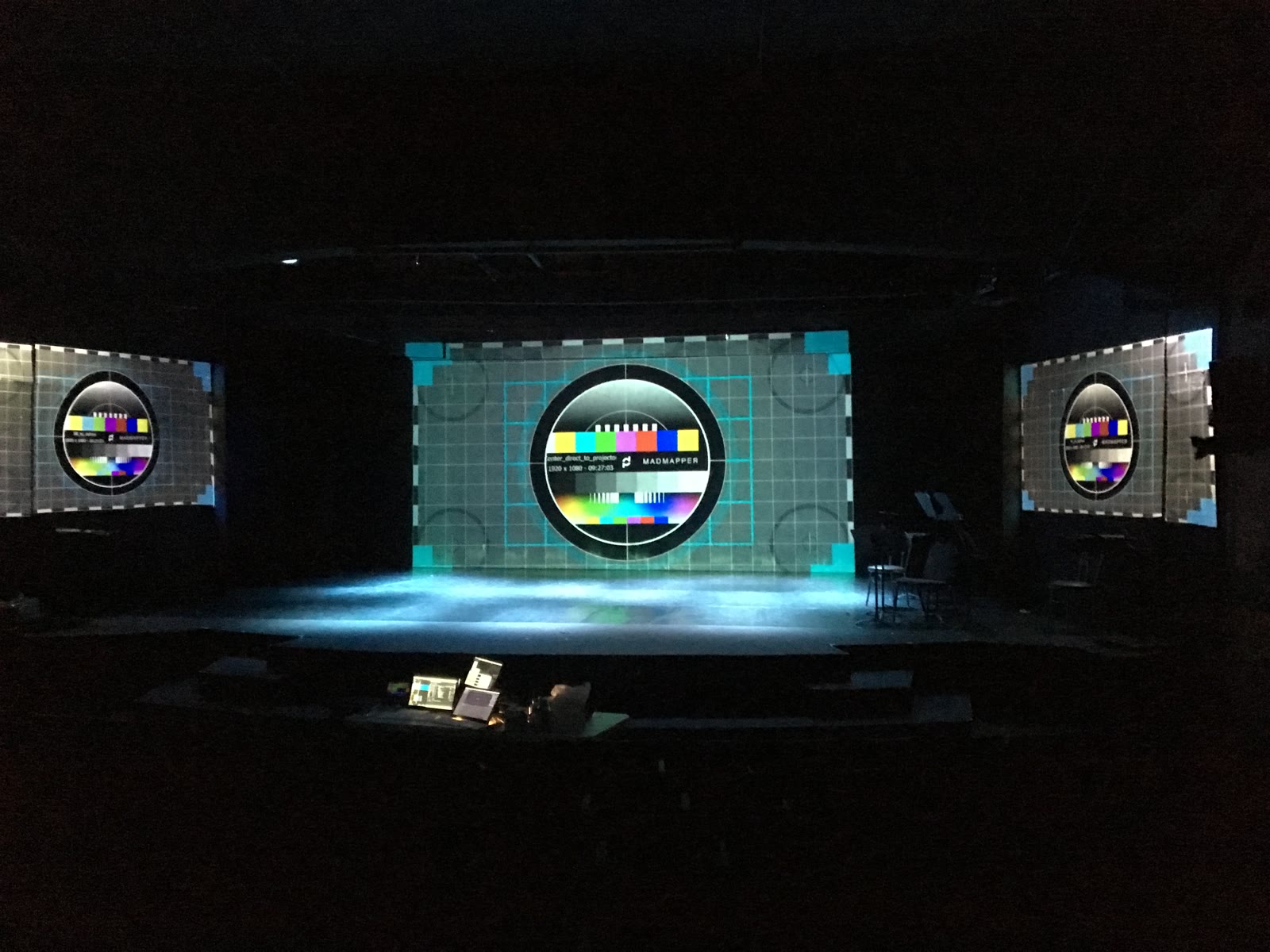
Technology: MadMapper, Resolume, QLab, Blender, pose tracking, custom software.
Ongoing · with Edward Bock & Pam Gleason
Sound · Video · Livestream
When the building closed in March 2020, the congregation had one weekend to work
out how to hold Shabbat over Zoom — for a room that speaks, sings and falls silent
together.
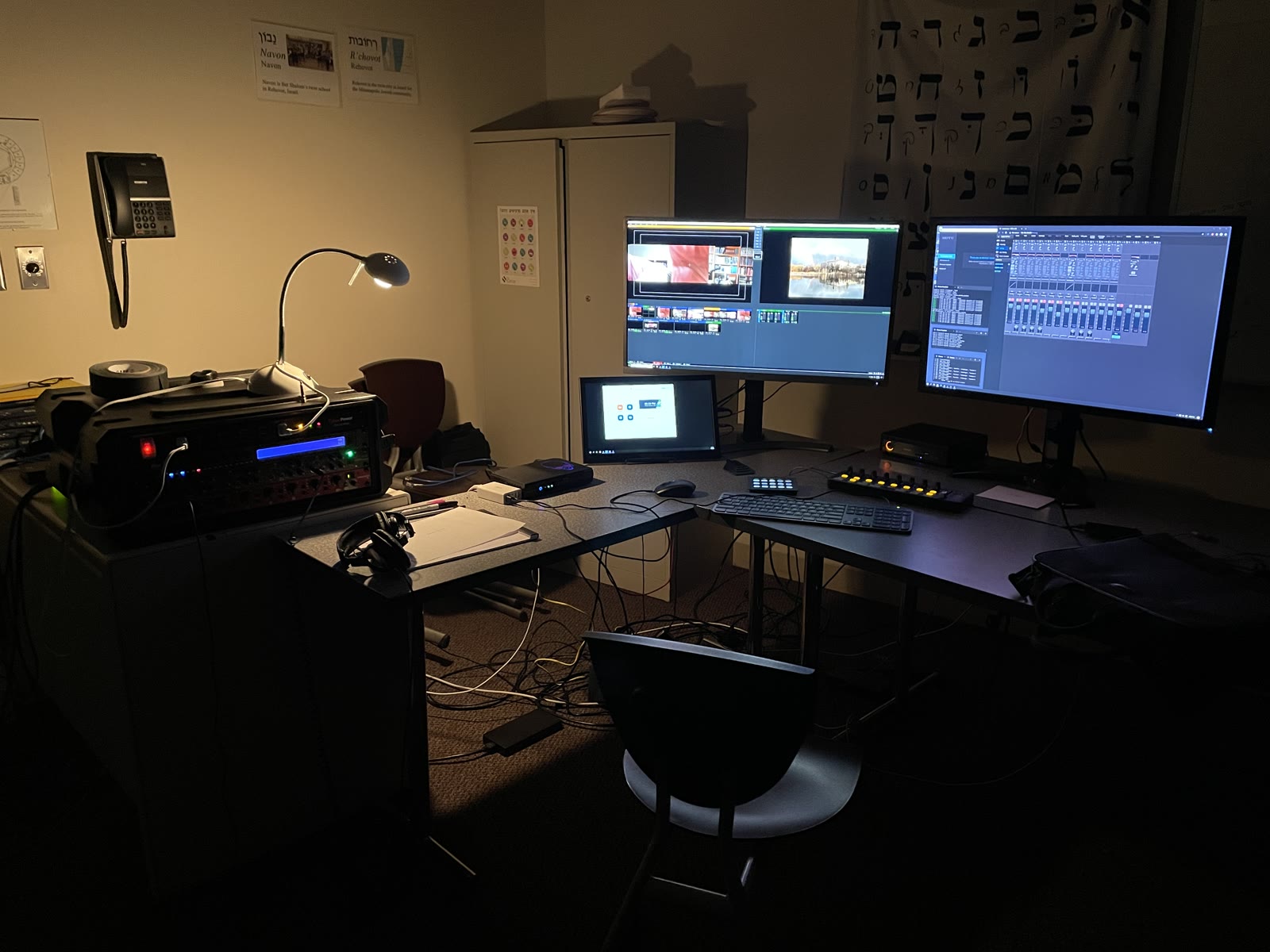
A studio for each member of clergy, tuned to how that person works, and software
letting them talk to each other while muted to the broadcast. The Zoom community
outlived the shutdown; the system now runs the sanctuary as well.
Technology: vMix, MOTU AVB, Dante, NDI and remote PTZ cameras, Stream Deck,
integrated with the house X32, Sennheiser wireless and London Blue.
November 2020 — the room it ran out of that first year
2020 – present · Bet Shalom Congregation · Minnetonka, MN
I design light, sound and projection for live performance, and I build the instruments when the ones a show needs don't exist yet. In 2026 that has meant three productions: a seven-play anthology in the spring, a new-work festival in the summer, and the collection of one acts running now.
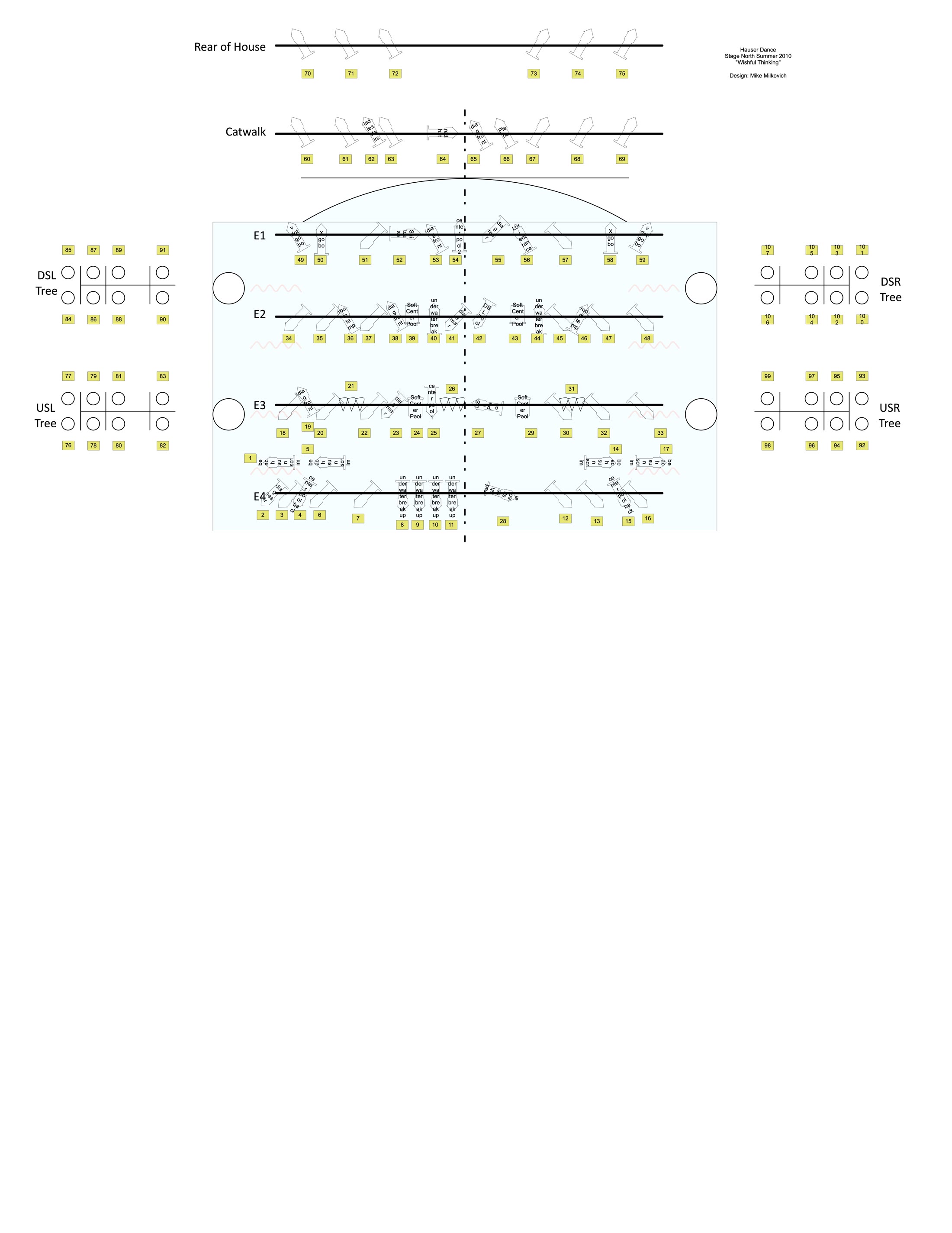
Designing a rig is two jobs. The first assembles the orchestra — which instruments, placed where, played by whom. The second composes for it. I build the orchestra I compose for, and I compose for the orchestra I build. Both are in service of the director's vision, and finally in service of the very human audience sitting in the dark.
I came up in this work as a master electrician, running a full season at Actors Theatre of Louisville — both stages, plus the Humana Festival of New American Plays. Twenty-five years as a software engineer and architect taught me the rest: a show is a system. Cue stacks, networks, power, and the people running them all have to hold under pressure, in a room where there is no second take. A well-built rig, like a well-built system, is invisible. The audience feels the result and never sees the scaffolding.
When the effect a director wants does not exist off the shelf, we build it: hardware, firmware, and the cue programming that makes it part of the show. The tools have changed; the habit goes back to 1988.
Hardware · Firmware
Mains-powered LED rope and fairy-light fixtures, built into the set and cued from QLab alongside sound and video.
A custom carrier board carries the controller and a level-shifted data line; power for the rope stays off-board on a fused strip. Each fixture joins the show network and takes cues in real time.
Technology includes: ESP32 (M5StickC), WS2812B pixels, custom PCB (KiCad), custom firmware, Art-Net, OSC, QLab.
Used in: Toward the Unknown Region · Christmastown · 2026
Hardware · Firmware
Battery-powered props that flicker like candle flame, with nothing tethering them to the set.
A small custom carrier board pairs a wireless controller with a boost supply sized for a full show, and reports battery level so the crew knows before the audience does. The lighting console cues them like any other fixture.
Technology includes: ESP32 (M5StickC), WS2812B pixels, custom PCB, custom firmware, Art-Net, OSC.
Used in: Women's One Acts · 2026
The habit is not new. One season at Actors Theatre of Louisville ran to some twenty productions across two stages, seven of them world premieres. Somewhere in that year the two halves of the job turned up in their purest forms — one show whose effects had to be invented before they could be cued, and one that was nothing but the composing.
Building the orchestra
The lab and creation sequence needed several visual effects at once, in an era
before projection could do any of it. So they were built: custom strobes, a
translucent floor that lit from within to become the Creature's tank, and a wall
of bulbs on wires for the Radio City blaze of I'm Going Home. Then the
finale: a reverse sunset, and the castle launching — which is where the
RD Memorial Cue got its name. Every instrument in the building,
up to full. A fine test of the house power, and of the air conditioning.
Thirty-eight years before the flame jars, the same answer — if the instrument
isn't on the shelf, make the instrument.
1988 · Actors Theatre of Louisville
Composing for it
Four monologues, almost no event, everything carried by light. Run on a manual
24-channel two-scene preset board — no memory, no fade but the one your hands
make.
The fastest cue in the show was fifteen seconds. Several ran two to three
minutes and moved the dimmers no more than forty percent. Excruciating to
operate. I'm told it was something to sit in front of.
1988 · Actors Theatre of Louisville
Quoted with permission and attributed by role; names available on request.
The tech elements would never have worked had it not been for you and your professional experience. Without you this could have been a distracting mess… we want to continue to find ways to collaborate with you. Festival Director · Young Minnesota Playwrights
It was an absolute pleasure to work with you. I can't express enough gratitude and appreciation for your grace and heart. This was a very stressful process, and you made it so much better through your enthusiasm and talent. Director · Ogygia and Bless Me, Dear Sinner · Young Minnesota Playwrights
You approach everything with so much thought and care, and I really respect all of the details that go into your designs. I look forward to the day we can work together again. Director · Christmastown
Lloyd's Prayer appears twice — its world premiere at the 1988 Humana Festival,
then again at Illusion Theatre the year after, from the other side of the booth.
Studied at Cornell University and the University of Minnesota.
I take one or two productions a season, in and around the Twin Cities, as a hands-on designer rather than a department head. If you have a show with a problem in it — a look that isn't reachable with the inventory, a prop that has to do something nothing on the shelf does — that is the conversation I want.
Twin Cities, Minnesota · references and résumé on request